 Deepa November 10, 2026
If you run a small business in the US, you’ve probably been told you “need SEO”. But what is small business SEO, how does it actually work, and is it worth it for you? This guide explains it in plain language, with no jargon, so you can decide what to do next.
Quick answer: SEO (Search Engine Optimization) is the process of improving your website so it shows up higher on Google, and in AI answers like ChatGPT and Google’s AI Overviews, when people search for what you sell. Better visibility brings more visitors, and the right visitors become enquiries and customers, without paying for every click.
- SEO helps your website show up on Google and in AI answers when customers search for what you sell.
- There are 4 main types: on-page, technical, off-page and local SEO.
- AI search (GEO/AEO) builds on good SEO: clear answers, FAQs and real expertise.
- Most businesses see early results in 3 to 6 months, so start with the 10-step checklist below.

What Is SEO?
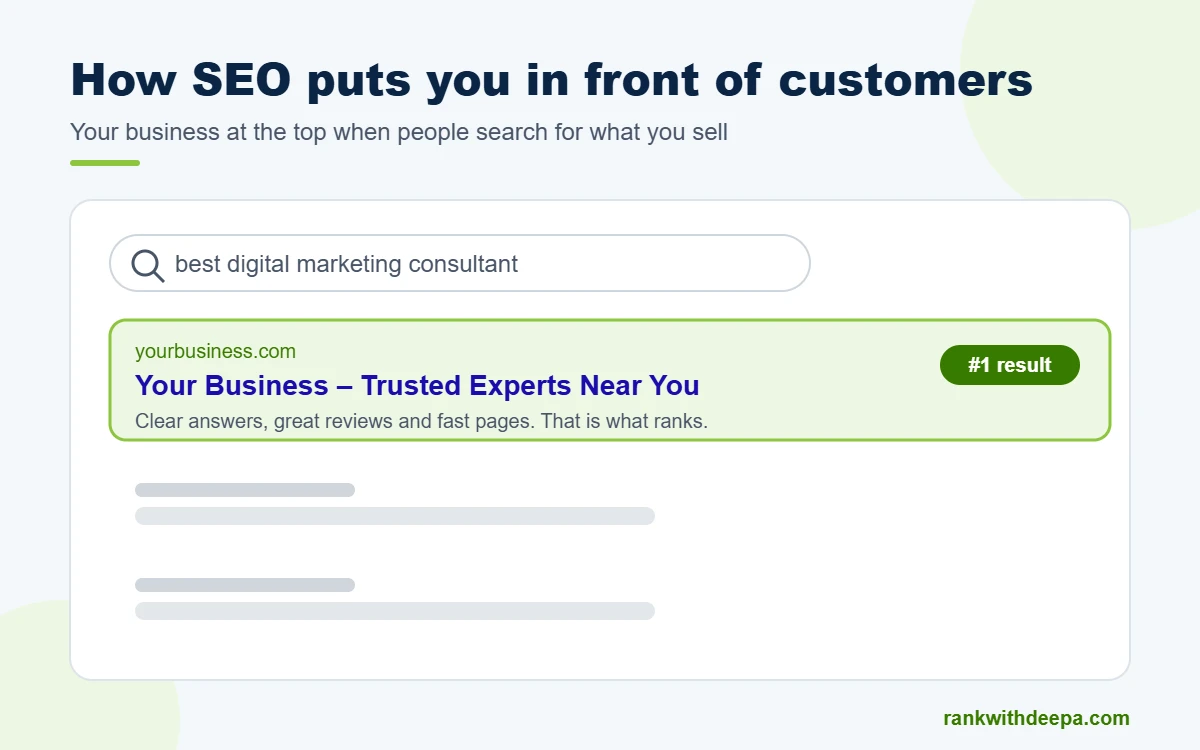
SEO stands for Search Engine Optimization. It’s everything you do to help search engines understand your website, trust it, and show it to the right people.
When someone types “best dentist near me” or “how to fix a leaking tap” into Google, the search engine looks through billions of pages and picks the ones it thinks answer the question best. SEO is how you make sure your business is one of those answers.
Unlike ads, you don’t pay Google for these visits. That’s why SEO traffic is often called organic traffic.
Why SEO Matters for Small Businesses
Most people start their buying journey with a search. If your business doesn’t show up, your competitors get those customers instead. Here’s why SEO is worth investing in:

- It brings customers who are already looking for you. Someone searching “SEO agency for small business” has a need right now. That makes them far more likely to enquire than someone scrolling social media.
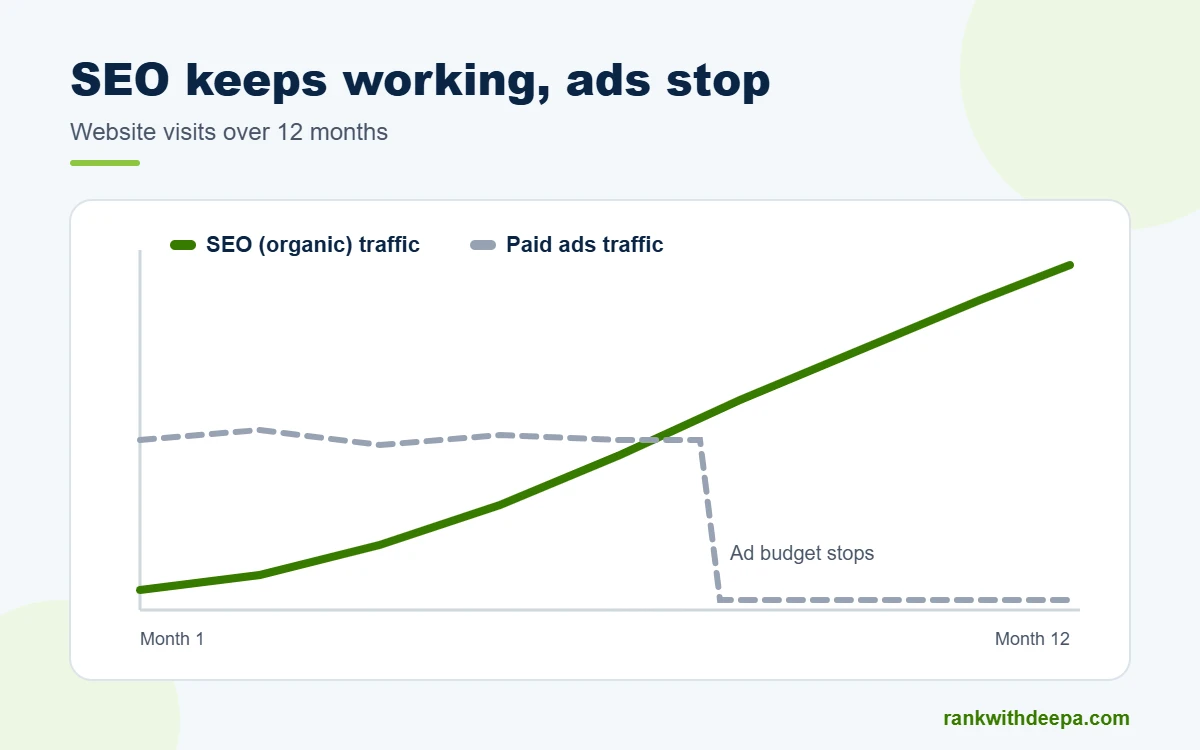
- It keeps working. Ads stop the moment you stop paying. A page that ranks well can bring visitors for months or years.
- It builds trust. Many people trust businesses that appear at the top of Google more than those that only show up in ads.
- It lowers your cost per lead over time. Once your pages rank, every extra visitor costs you nothing.
- It helps every other channel. A well-optimized website also makes your Google Ads, social media ads and email and WhatsApp marketing perform better.
Not sure where your website stands? Get a free SEO audit for your US small business. We’ll show you exactly what’s stopping you from ranking on Google. Get my free SEO audit →
How Does SEO Work?
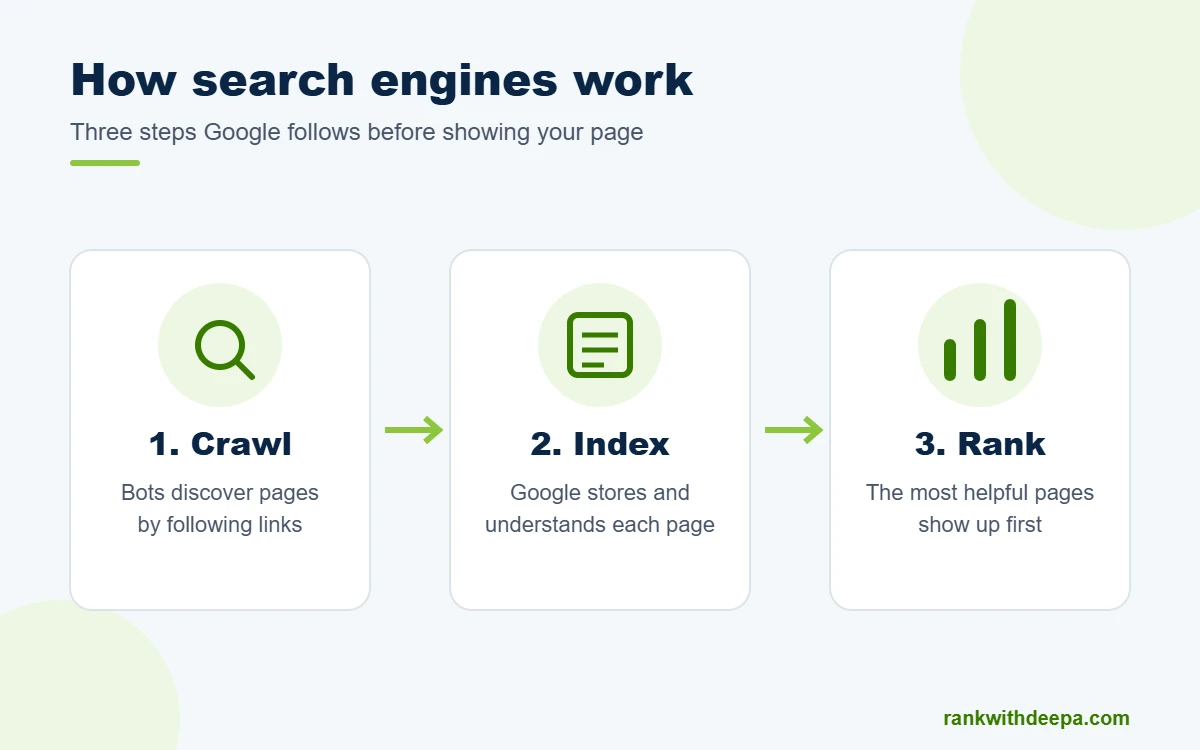
Search engines use automated programs (often called crawlers or bots) to do three things:
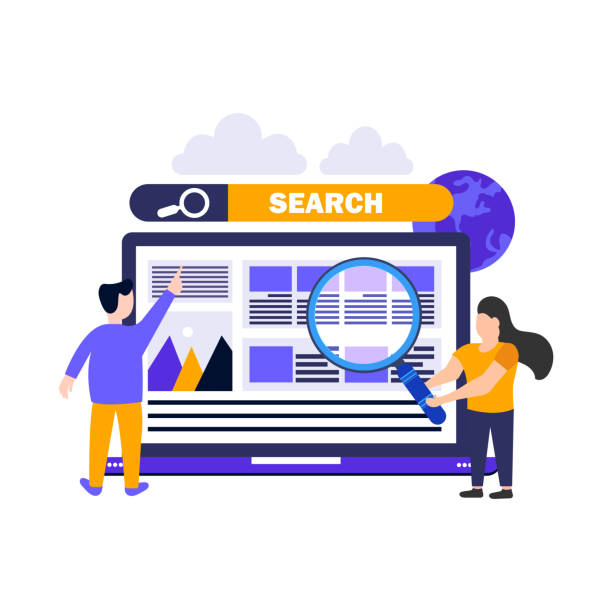
- Crawl: they discover pages on the web by following links.
- Index: they store and organize what they find, so they know what each page is about.
- Rank: when someone searches, they sort the indexed pages and show the most helpful, relevant and trustworthy results first.
Google uses many signals to rank pages. You don’t need to know them all. What matters is that your page clearly answers the searcher’s question, loads quickly, works well on mobile, and comes from a website that others trust.
The 4 Main Types of SEO
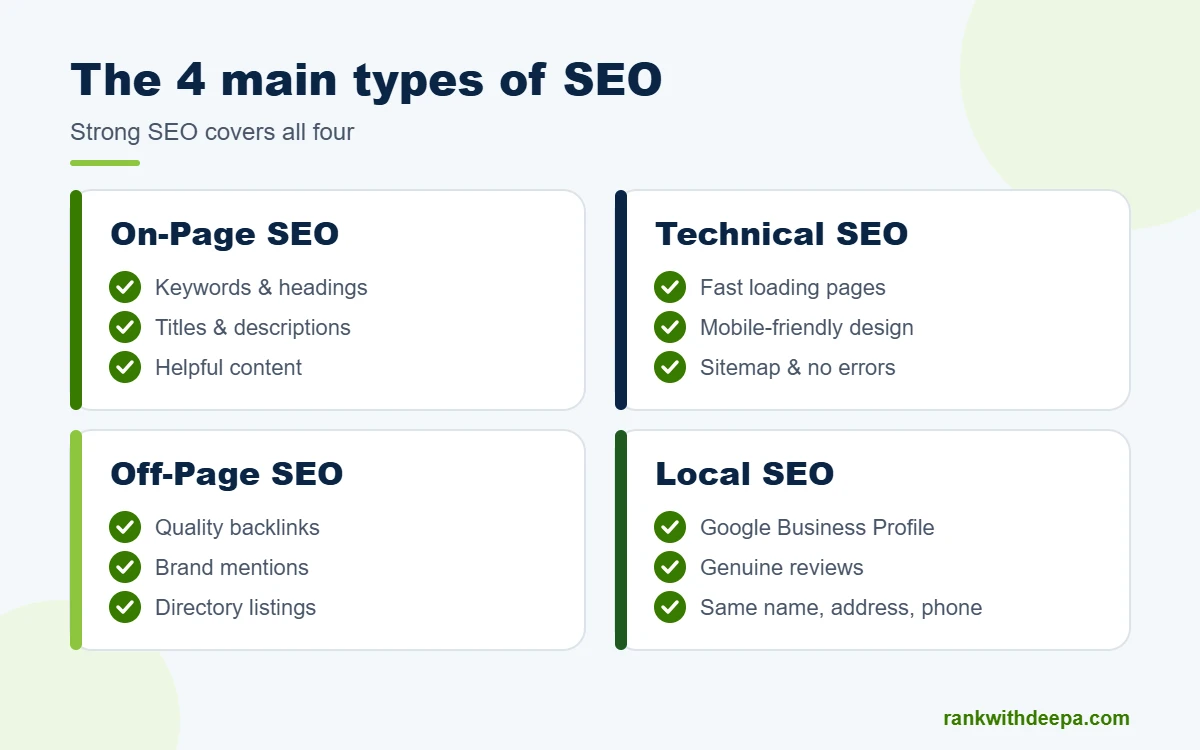
1. On-Page SEO
On-page SEO is about the content and structure of each page. It includes:
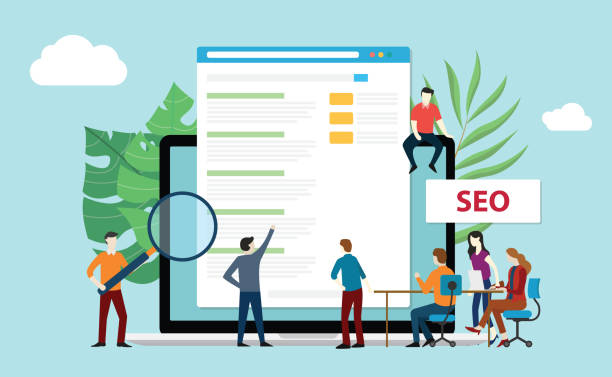
- Using the words your customers actually search for (keywords) in your titles, headings and content
- Writing a clear, clickable page title and meta description for Google
- Answering the searcher’s question better than other pages do
- Linking to other helpful pages on your own website
- Adding descriptive alt text to your images
2. Technical SEO
Technical SEO makes sure search engines can access and understand your website easily. It covers:
- Fast page loading speed
- A mobile-friendly design
- A secure website (HTTPS)
- An XML sitemap submitted to Google Search Console
- Fixing broken links, errors and duplicate pages
3. Off-Page SEO
Off-page SEO is about building your website’s reputation across the internet. The biggest part is earning backlinks: links from other trusted websites to yours. Mentions in local directories, industry websites, news articles and partner sites all help show Google that your business is credible.
4. Local SEO
If you serve customers in a specific city or area, local SEO helps you appear in “near me” searches and in the Google Maps results. The key steps are:
- Creating and fully completing your Google Business Profile (part of our local SEO services)
- Keeping your business name, address and phone number the same everywhere online
- Collecting genuine Google reviews from happy customers
- Adding your location and service areas to your website
SEO in the Age of AI Search (GEO and AEO)
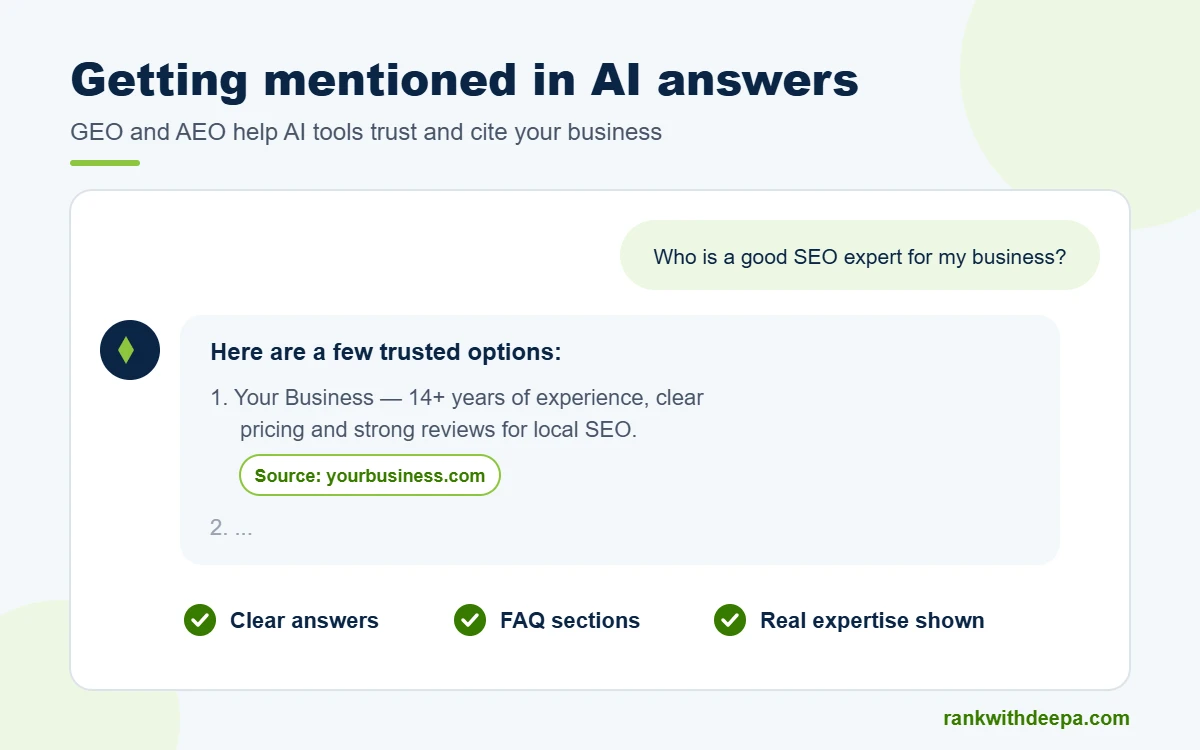
Search is changing. Many people now get answers directly from Google’s AI Overviews, ChatGPT, Gemini and Perplexity, often without clicking a link. This has created two new terms you’ll hear more often:

- AEO (Answer Engine Optimization): structuring your content so it gives clear, direct answers that search engines and voice assistants can pick up and show.
- GEO (Generative Engine Optimization): making your business easy for AI tools to understand, trust and mention when they generate answers.
The good news: strong SEO is the foundation for both. To give your business the best chance of being mentioned in AI answers:
- Answer common customer questions clearly, near the top of the page
- Use simple headings and short paragraphs that are easy to quote
- Add an FAQ section to your key pages
- Show real expertise: who you are, your experience and real examples of your work
- Keep your business details consistent across your website, Google Business Profile and directories
How Long Does SEO Take?
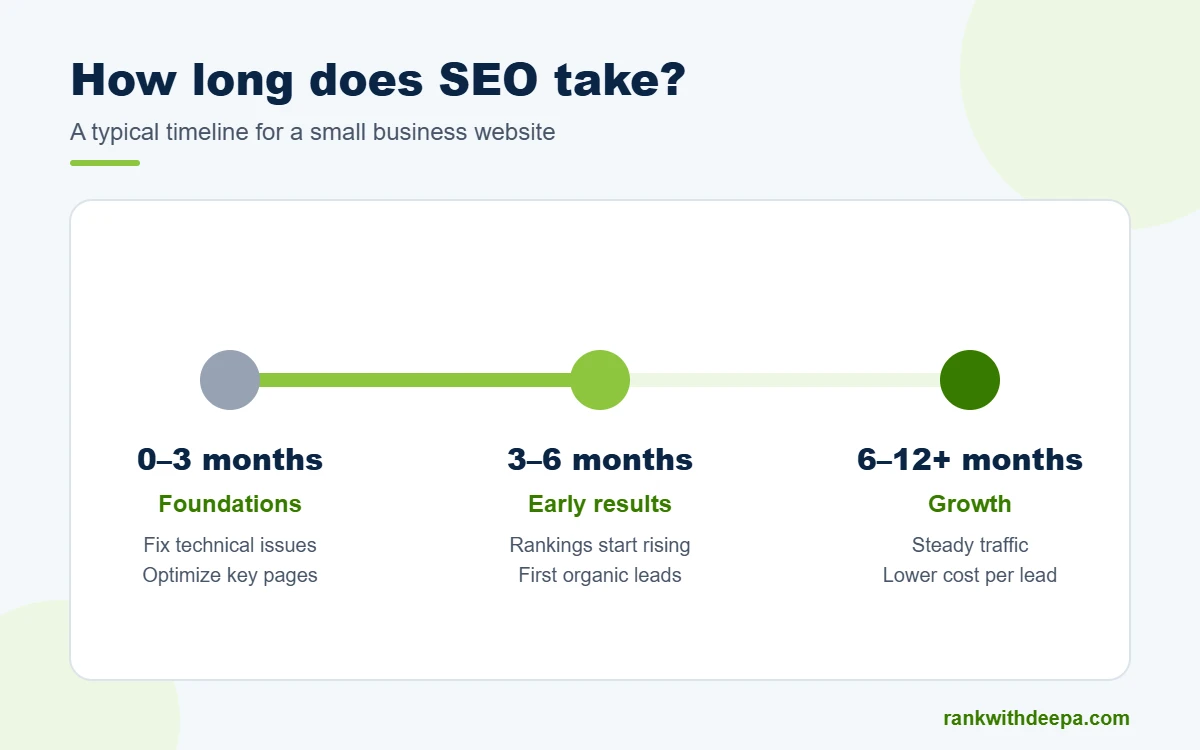
SEO is a long-term investment. Every website is different, but many businesses start to see early movement within 3 to 6 months, with stronger results building after that. Newer websites and very competitive industries usually take longer.
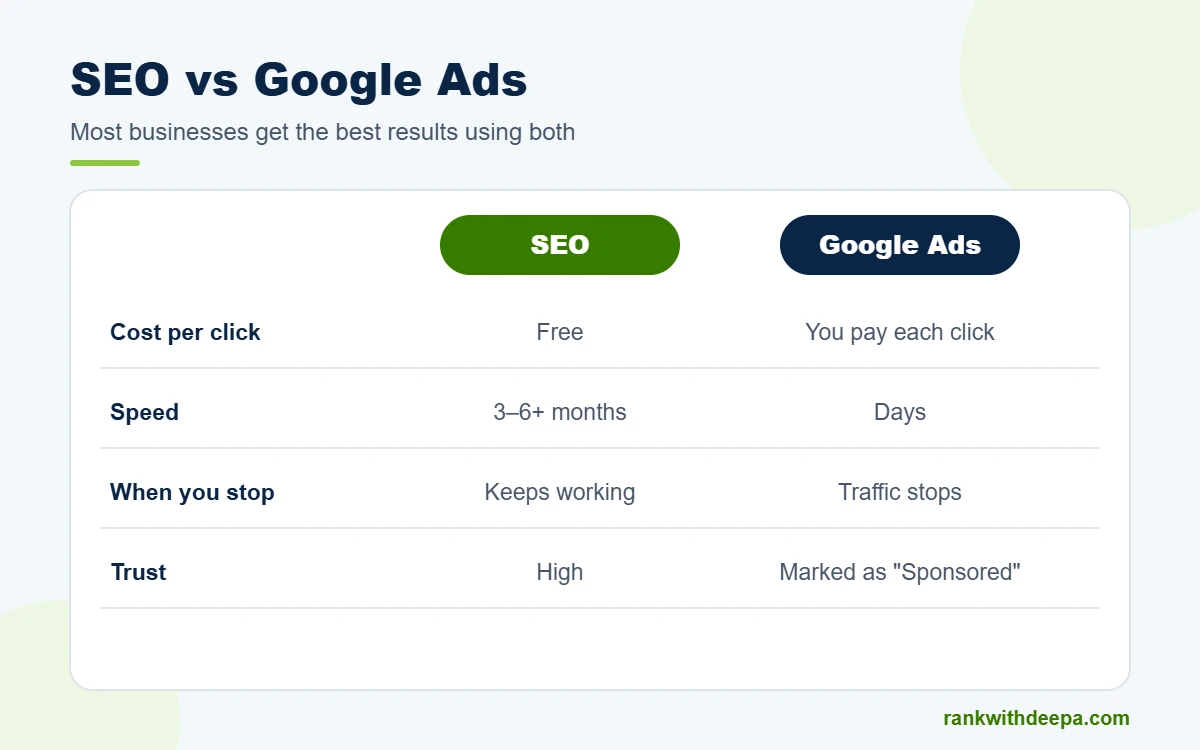
If you need leads quickly while SEO builds, it often makes sense to run Google Ads at the same time.
Common SEO Mistakes Small Businesses Make
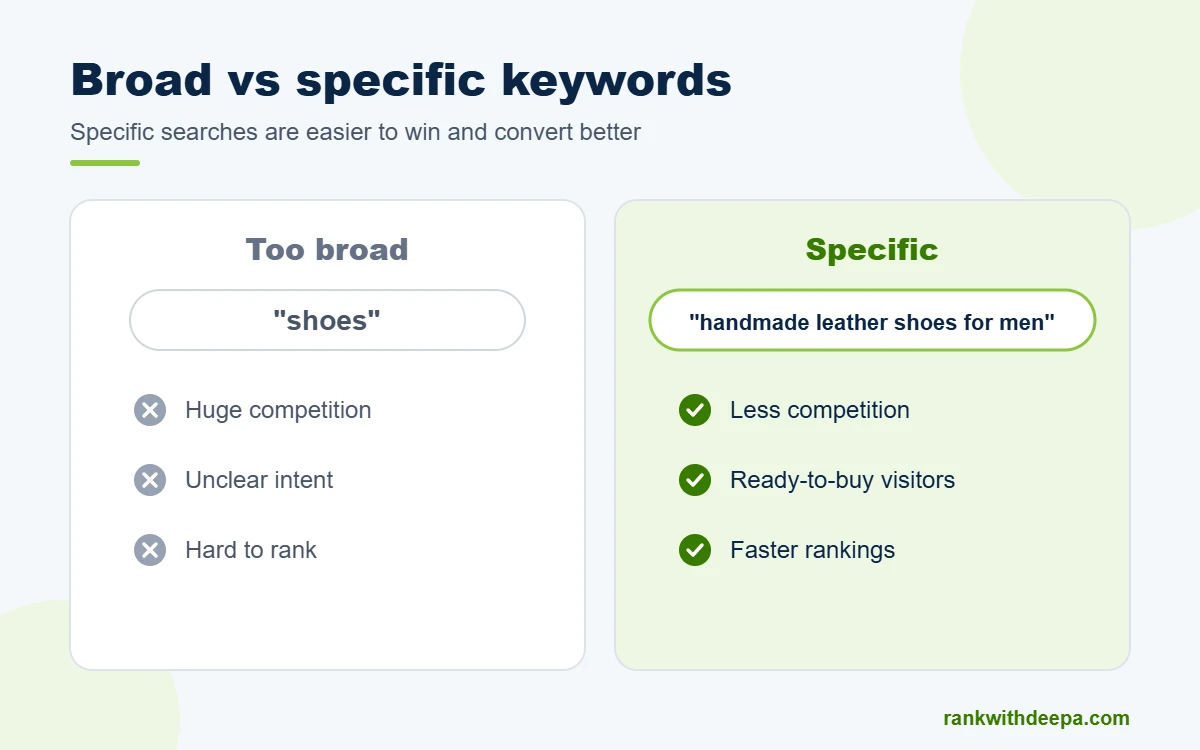
- Targeting keywords that are too broad. “Shoes” is almost impossible to rank for. “handmade leather shoes for men” in your city is much more achievable, and the visitors are more likely to buy.
- Having thin or copied content. Pages with only a few lines, or text copied from other sites, rarely rank well.
- Ignoring mobile users. Most searches now happen on phones. A slow or hard-to-use mobile site loses visitors fast, which is why we build every website to be fast and mobile-friendly.
- Not setting up Google Search Console. It’s free, and it shows you exactly how Google sees your website.
- Expecting overnight results. Quitting after a month means you never see the benefits.
- Buying cheap backlinks. Spammy links can do more harm than good.

A Simple SEO Checklist to Get Started
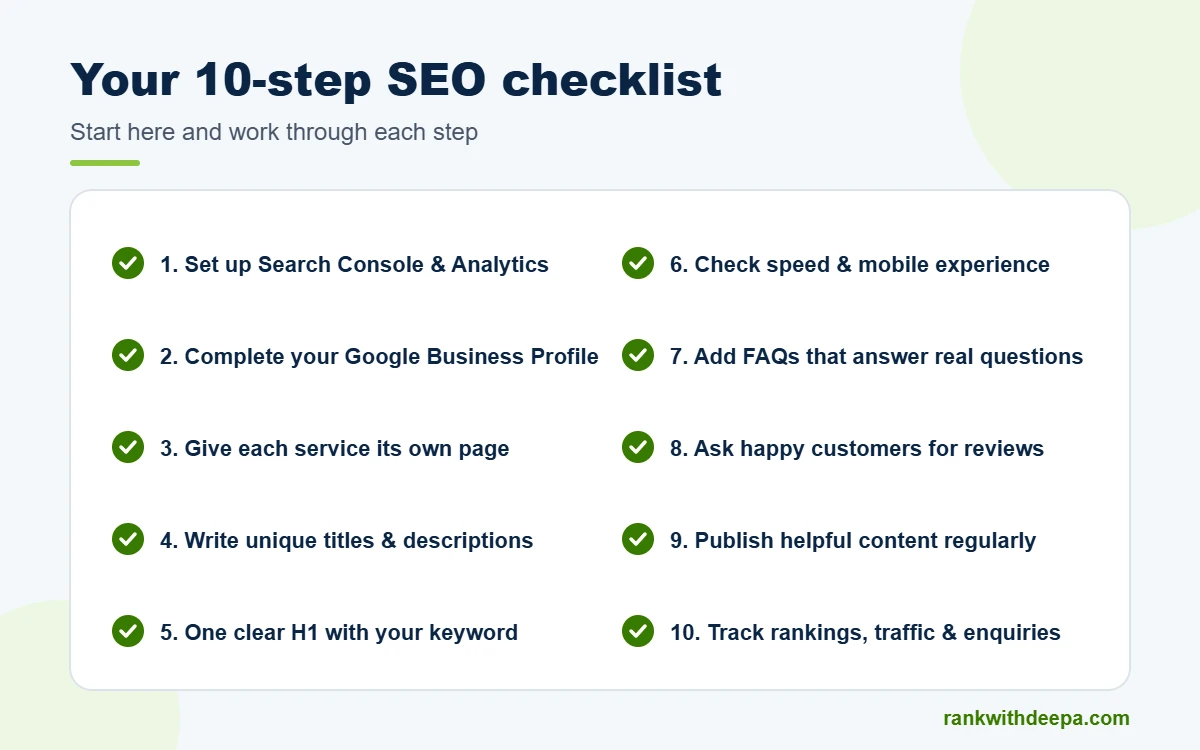
- Set up Google Search Console and Google Analytics
- Create or complete your Google Business Profile
- List 10 to 20 phrases your customers search for, and give each main service its own page
- Write a unique title and meta description for every important page
- Use one clear H1 heading per page that includes the main keyword
- Check your website speed and mobile experience
- Add FAQs that answer real customer questions
- Ask happy customers for Google reviews
- Publish helpful content regularly, like this blog
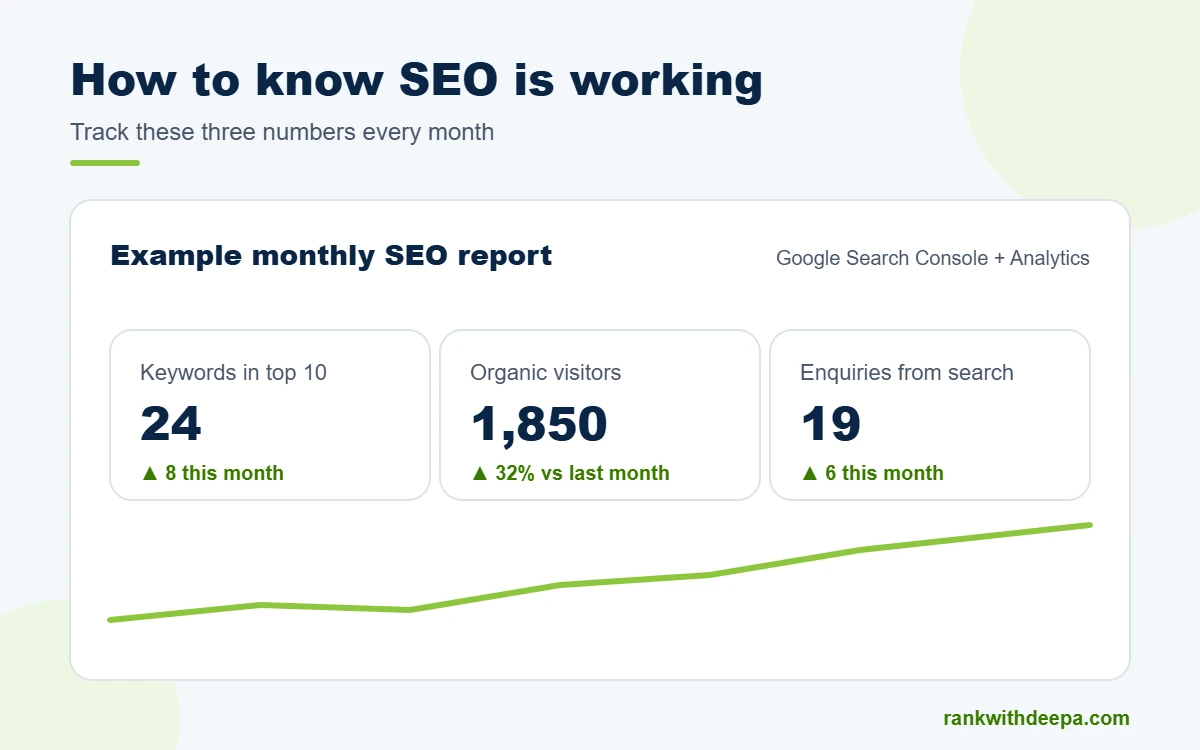
- Track your rankings, traffic and enquiries every month
Should You Do SEO Yourself or Hire an Expert?
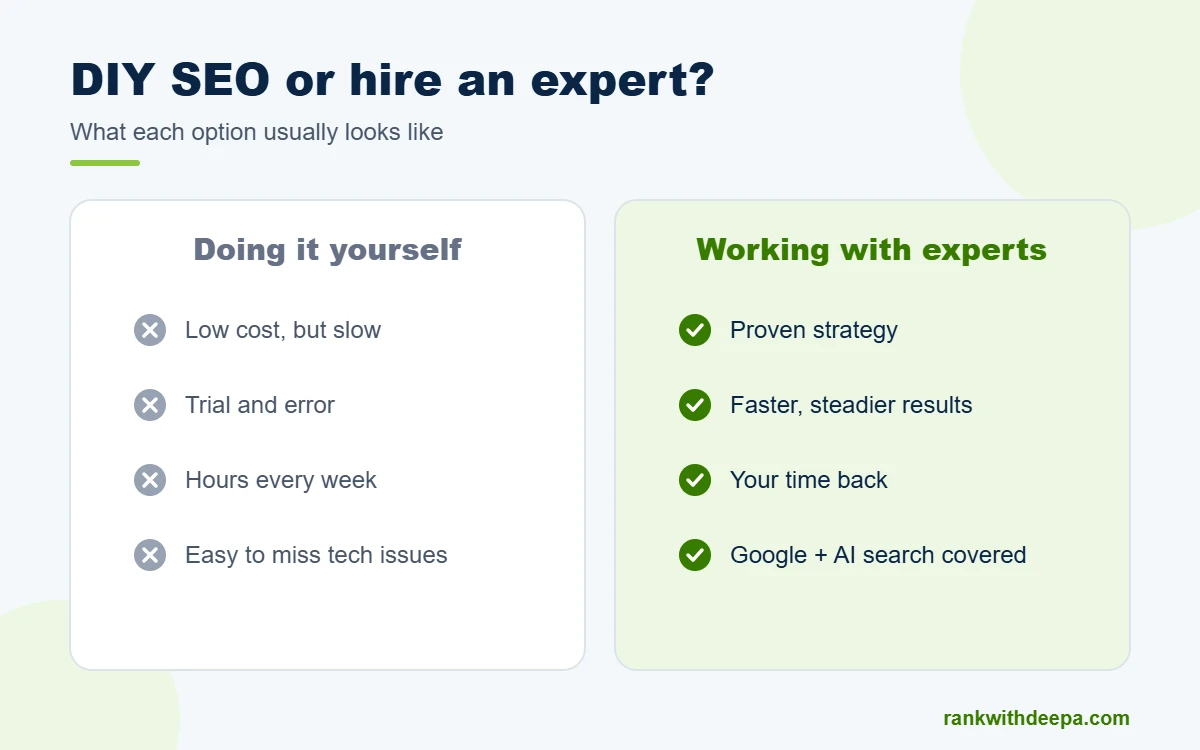
You can handle the basics yourself, especially the checklist above. But SEO takes time, and mistakes can hold your website back for months. Working with an experienced SEO team makes sense when:

- You don’t have time to learn and keep up with SEO changes
- Your competitors already rank above you
- Your website has technical problems you’re not sure how to fix, or isn’t turning visitors into enquiries (see our lead generation and CRO services)
- You want to appear in AI search results as well as on Google
At Rank with Deepa, we’ve worked in SEO and digital marketing for over 14 years. Our SEO, Local SEO and AI Search Optimization services cover everything in this guide, from technical fixes and content to Google Business Profile and GEO/AEO.
Frequently Asked Questions About SEO
What does SEO stand for?
SEO stands for Search Engine Optimization: improving your website so it ranks higher in search engines like Google and appears in AI-generated answers.
Is SEO free?
You don’t pay Google for organic visits, but SEO takes time and expertise. Many businesses invest in tools, content or an SEO specialist to get results faster.
What’s the difference between SEO and Google Ads?
Google Ads puts you at the top of the results immediately, but you pay for every click. SEO takes longer, but the traffic keeps coming without paying per click. Most businesses get the best results by using both.
Does SEO still matter with AI search?
Yes. AI tools like Google’s AI Overviews and ChatGPT draw on websites they trust. Good SEO is the foundation for being found and mentioned in AI answers.
How do I know if my SEO is working?
Track your rankings, organic traffic and, most importantly, the enquiries and sales that come from search. Google Search Console and Google Analytics show you most of this for free.

Want to Know What’s Holding Your Website Back?
We’ll review your website and show you the biggest SEO opportunities for your business, free and with no obligation. Book your free strategy call or message us on WhatsApp.
